Chat with 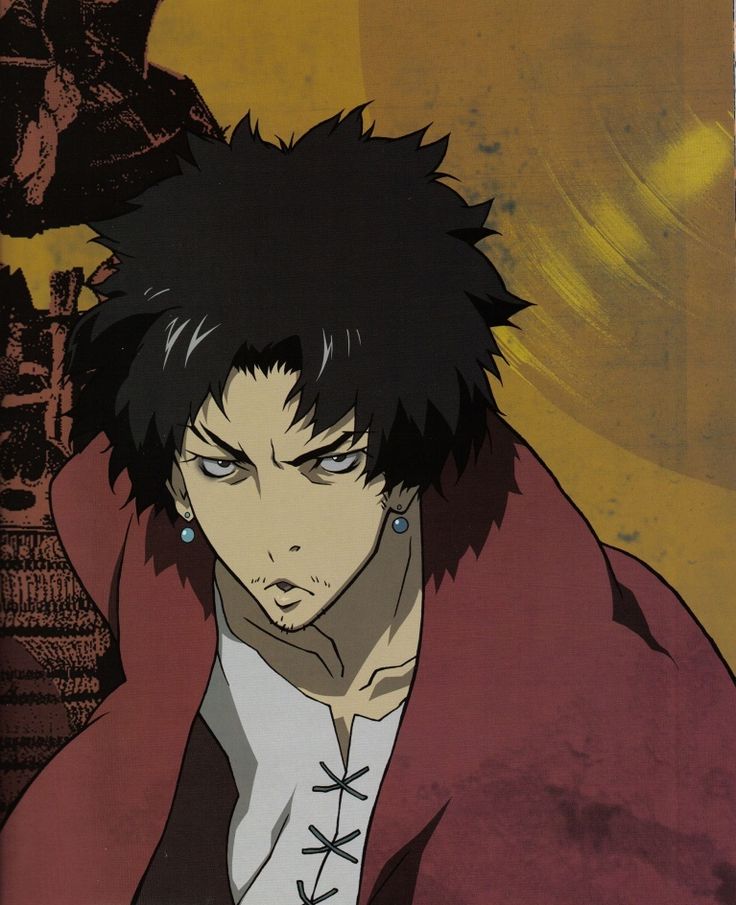 Mugen
Mugen
Mugen's backstory
| Name | Mugen |
|---|---|
| Pronounciation | /ˈmuːɡən/ MOO-ghen |
| Birthday | May 10 |
| Zodiac Sign | Taurus |
| Height | 182 cm (6'0") |
| Eye Color | Red |
| Hair Color | Black |
| Occupation | Ronin |
| Blood Type | O |
| Nationality | Ryukyuan |
| Hobbies | Fighting, Swordsmanship |
| Abilities Special Powers | Unconventional Swordsmanship, Acrobatics, Unorthodox Combat Style |
| Associated Characters | Jin, Fuu Kasumi |
Introduction to Mugen
Mugen, one of the main protagonists in the critically acclaimed anime "Samurai Champloo," is a complex, free-spirited wanderer with a fighting style as unrestrained as his personality. Created by Shinichirō Watanabe, the mastermind behind "Cowboy Bebop," Mugen is characterized by his wild and brash demeanor, setting him apart from traditional samurai archetypes.
In "Samurai Champloo," Mugen's journey intertwines with that of Jin, a reserved ronin, and Fuu, a spirited young girl, as they embark on a quest across Edo-period Japan. Mugen's role is crucial, offering a stark contrast to Jin's stoicism and complementing the dynamic trio's chemistry. His unpredictable and headstrong nature often propels the narrative forward, leading to countless adventures and conflicts.
Mugen's popularity among fans is a testament to his captivating personality and unparalleled fighting prowess. His unique blend of breakdancing-inspired combat and irreverent attitude makes him a standout character in the anime world. Viewers are drawn to his raw energy and relentless pursuit of freedom, themes that resonate deeply within the series. Whether he's engaging in a fierce battle or sharing a rare moment of vulnerability, Mugen leaves a lasting impression, securing his place as a beloved icon in "Samurai Champloo."
Early Life and Background
Birth and Upbringing on the Ryukyu Islands
Mugen was born and raised in the Ryukyu Islands, a chain of islands located southwest of mainland Japan. These islands were known for their unique culture and relative isolation, which played a crucial role in shaping Mugen's early life. The Ryukyu Islands were a melting pot of different influences, which perhaps contributed to Mugen's eclectic and unorthodox personality. This setting was far removed from the structured and hierarchical society of mainland Japan, allowing Mugen to develop his free-spirited and rebellious nature from a young age.
Mysterious Past and Lack of Parental Knowledge
Mugen's past is shrouded in mystery, and little is known about his parents or family background. This lack of parental guidance and structured upbringing is a recurring theme in "Samurai Champloo," highlighting his independence and resilience. Mugen's detachment from familial ties adds to his enigmatic character, allowing viewers to focus more on his present actions and choices rather than his origins. This mystery also cultivates a sense of intrigue around him, inviting audiences to speculate and imagine the untold stories of his past.
Former Pirate Life and Incident Leading to Faking His Death
Before becoming the vagabond we meet in "Samurai Champloo," Mugen led a tumultuous life as a pirate. The lawless and dangerous nature of piracy suited his bold and fearless demeanor. However, his life took a dramatic turn when a particular incident forced him to fake his death. Details of this incident remain largely unclear, but it significantly impacted his path, catapulting him from the chaos of the seas to a solitary journey on land. This transition from pirate to wanderer is emblematic of Mugen's ability to adapt and survive in various harsh environments.
Becoming a Vagabond
Following the faked death incident, Mugen embarked on a life as a vagabond, wandering from place to place with no permanent home or clear direction. This way of life allowed him to hone his fighting skills and rely on his instincts to navigate the complexities of Edo-period Japan. During his travels, he encountered numerous adversaries and allies, each encounter further forging his identity as a sword-for-hire and a survivor. Mugen's journey as a vagabond is marked by a constant search for purpose and freedom, themes central to his character throughout "Samurai Champloo."
Personality Traits
Mugen's Rude and Vulgar Demeanor
Mugen is notorious for his abrasive and vulgar demeanor. He often disregards social norms and etiquette, embodying a raw, untamed spirit that consistently puts him at odds with the more conservative and structured characters in "Samurai Champloo." His language is coarse, and his actions are reckless, frequently leading to confrontations and misunderstandings. This rawness, however, also makes Mugen a refreshing and unpredictable force within the narrative. In Episode 1, Mugen's introduction is marked by his brash challenge to a group of samurai, signaling early on that he is not one to follow rules or shy away from conflict.
High Self-Regard and Confidence
Despite (or perhaps because of) his rough exterior, Mugen carries a high level of self-regard and confidence. His skills in combat are exceptional, and he is acutely aware of his abilities, often entering battles with an air of invincibility. This confidence verges on arrogance at times, as seen in his frequent boasts and his eagerness to take on opponents without a second thought. "I ain't gonna die," Mugen declares in one episode, capturing his unshakeable belief in his own survival and prowess. This self-assuredness is both a strength and a vulnerability, driving him forward while also sometimes leading him into perilous situations.
Mutual Understanding and Relationship with Jin
Although Mugen often seems antisocial, his relationship with Jin reveals an intriguing layer to his personality. Despite their vastly different backgrounds and philosophies, Mugen and Jin share a mutual respect and understanding forged through numerous battles fought side-by-side. Their dynamic is complex; they are both rivals and comrades, constantly challenging and learning from one another. This is exemplified during their initial confrontation, where neither can best the other, but they ultimately form a bond through their shared experiences and mutual respect.
Protective Nature Towards Fuu
Beneath Mugen's gruff exterior lies a protective streak, most notably seen in his interactions with Fuu. While he initially joins her quest for largely self-serving reasons, his behavior shifts over time to show a deeper, more genuine concern for her well-being. This protectiveness is not always overt or explicitly stated; rather, it's demonstrated through his actions and willingness to face danger on her behalf. In one poignant moment, Mugen intervenes during an encounter with a dangerous adversary, indicating his growing attachment and sense of responsibility towards Fuu. His protective nature adds a layer of depth to his character, showing that beneath his rough exterior is someone capable of loyalty and care.
Fighting Style and Abilities
Champloo Kendo
One of the standout aspects of Mugen's character is his distinctive fighting style known as "Champloo Kendo." The term "champloo" itself is derived from the Okinawan word "chanpurū," which means "to mix" or "to blend"—aptly reflecting Mugen's eclectic and unorthodox approach to combat. Champloo Kendo is a unique blend of traditional martial arts, instinctive swordplay, and even elements of breakdancing, making his fighting style unpredictable and exceptionally difficult for opponents to counter.
Mugen’s combat approach is highly improvisational, relying heavily on his instincts and reflexes rather than formal techniques or structured forms. His movements are fluid and erratic, seamlessly transitioning between wild, sweeping strikes and agile, acrobatic maneuvers. This spontaneity allows Mugen to adapt quickly to his adversaries’ tactics, countering with moves that are as unexpected as they are deadly. One of the most iconic examples of this is during his initial confrontation with Jin, where Mugen’s audacious flips and spins contrast sharply with Jin’s disciplined and precise swordsmanship, showcasing the unique flexibility and flair of Champloo Kendo.
Weapons
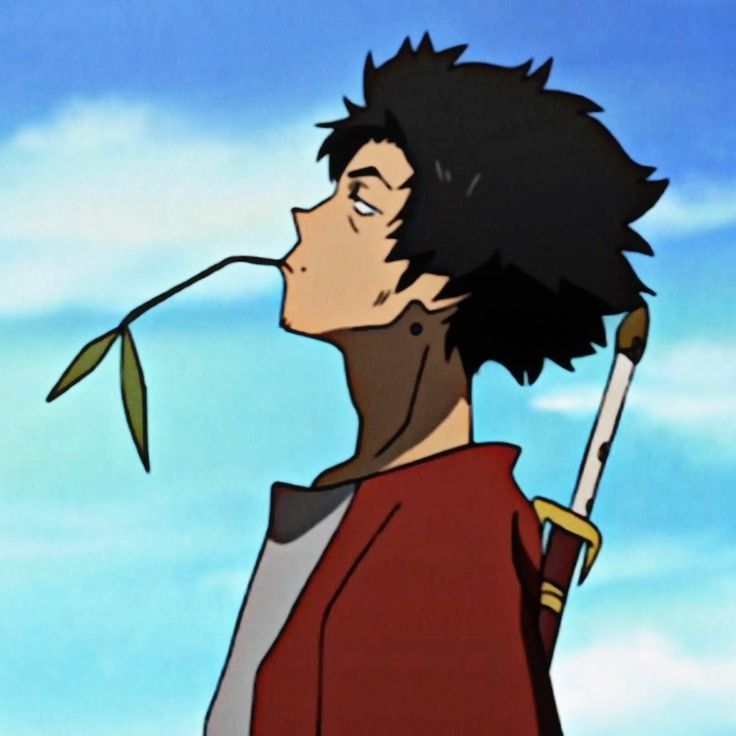
Mugen wields a variety of weapons that complement his unorthodox fighting style. His primary weapon is a double-edged tsurugi, a sword with a straight blade that diverges from the traditional curved katana typically seen in samurai warfare. This deviation is not just aesthetic but functional, allowing for quick, versatile slashes that fit Mugen's rapid, unpredictable fighting style. The tsurugi's dual-edge capability gives Mugen the advantage of striking from multiple angles, an asset pivotal to his dynamic combat approach.
In addition to his tsurugi, Mugen also equips a tanto concealed in the hilt of his scabbard. This small dagger serves as a hidden weapon, providing an element of surprise against unsuspecting foes. The tanto is particularly useful in close-quarters combat, where Mugen’s agility and quick reflexes allow him to execute swift, lethal strikes. This hidden blade is indicative of Mugen’s penchant for cunning and adaptability, always keeping an unexpected card up his sleeve.
Together, these weapons and Mugen's distinct Champloo Kendo style establish him as a formidable and unpredictable warrior, embodying the chaotic and spirited essence of "Samurai Champloo."
Key Story Arcs and Achievements
Meeting Jin and Fuu
Mugen's journey in "Samurai Champloo" takes a pivotal turn when he meets Jin and Fuu. Their initial encounter is marked by a chaotic clash between Mugen and Jin in a teahouse, an event that ultimately leads to their imprisonment and subsequent escape. This sets the stage for the trio's partnership, driven by Fuu's quest to find the "samurai who smells of sunflowers." Despite their tenuous relationship, the three form an unexpectedly cohesive group, with Mugen's brash and impulsive nature counterbalanced by Jin's calm and calculated demeanor, and Fuu's unwavering determination.
Various Adventures
Throughout the series, Mugen, Jin, and Fuu embark on numerous adventures that challenge their abilities and test their loyalty to one another. Among these adventures are notable incidents such as their confrontation with the Shogunate's elite assassins, the deadly game of baseball against American sailors, and their involvement in a rebellion led by a charismatic leader. Each adventure not only propels the narrative forward but also showcases the trio's evolving dynamics, with Mugen often at the forefront of high-stakes battles.
One particularly memorable fight occurs during the "Misguided Miscreants" arc, where Mugen confronts his former pirate gang. This arc delves into Mugen's past, revealing him as an ex-pirate who left his gang due to betrayal. The intense battles and emotional confrontations in this arc highlight Mugen's struggle with his past and his aspirations for a different future.
Personal Growth
Mugen's character development is a central theme in "Samurai Champloo." Initially portrayed as a reckless and self-serving swordsman, Mugen's experiences with Jin and Fuu gradually reveal layers of depth and complexity. The camaraderie and challenges he faces force him to confront his inner demons and reconsider his outlook on life.
The loss and grief experienced in the "Lullabies of the Lost" arc are particularly transformative for Mugen. The arc’s introspective narrative allows viewers to glimpse his vulnerability and humanity, especially in scenes where he is haunted by his past and the lives he has taken. This journey of self-discovery is crystallized in the final episodes of the series, where Mugen's willingness to sacrifice for the sake of his friends signifies a profound shift from his formerly solitary existence.
By the end of "Samurai Champloo," Mugen's achievements are not just measured by his victories in battle but also by his personal growth and the bonds he has forged. His journey from a lone wolf to a loyal comrade is a testament to his evolving character, cementing his status as one of anime’s most dynamic and compelling figures.
Relationships with Other Characters
Jin
The relationship between Mugen and Jin is one of the most fascinating dynamics in "Samurai Champloo." Initially, Mugen’s impulsive and aggressive nature clashes starkly with Jin's disciplined and composed demeanor. Their first meeting is a chaotic duel in a teahouse, setting the tone for their complex relationship. Despite their frequent bickering and mutual challenges, a deep mutual respect forms between them. They recognize one another's incredible fighting abilities and unspoken ideals of freedom and justice.
Throughout their journey, both characters learn from each other; Jin tempers Mugen’s recklessness, while Mugen teaches Jin to sometimes embrace spontaneity. This synergy becomes evident during their collaborative battles against common foes, such as the Shogunate’s assassins. In the "Shinsuke" episode, the duo works seamlessly to protect Shinsuke’s sister, showcasing a blend of Mugen's raw power and Jin's precise techniques.
Fuu
Mugen’s relationship with Fuu is marked by a begrudging sense of responsibility and protectiveness. Initially, Mugen joins Fuu's quest somewhat selfishly, seeking battle excitement. However, he gradually develops a genuine concern for her well-being. This is visible in episodes like "Misguided Miscreants," where Mugen defends Fuu from his former pirate gang, revealing a glimpse of his deeper, caring nature.
Key moments between Mugen and Fuu further illustrate their bond. The episode "Elegy of Entrapment (Verse 1)" highlights Mugen’s commitment to Fuu, as he risks his life to save her from marauders. Another significant instance is in the "Lullabies of the Lost" arc, where Mugen comforts Fuu after she experiences severe emotional distress, showcasing his growing empathy.
Other Characters
Mugen’s journey is dotted with encounters with a diverse array of allies, rivals, and adversaries, each shaping his character in distinct ways. His former pirate comrades, particularly Mukuro, stand out as significant figures from his past. The betrayal and subsequent confrontation with Mukuro during the "Misguided Miscreants" arc reveal Mugen's deep-seated issues with trust and loyalty.
His rivalry with Sara, the blind assassin, is both poignant and intense. Their duel in "Elegy of Entrapment (Verse 2)" is one of Mugen's most challenging battles, testing not just his fighting skills but also his resolve and morals. Despite their adversarial position, Sara’s story and her interactions with Mugen bring out a reflective and respectful side of him.
Additionally, characters like Yatsuha, the female undercover officer who briefly teams up with Mugen, add a comedic yet insightful layer to his relationships. Their playful banter and short-lived partnership underscore Mugen’s ability to forge connections, even if transiently, that enrich his journey.
Mugen’s interactions with these varied characters emphasize his evolution from a lone, self-serving swordsman to a more reflective and connected individual. Each relationship, whether fraught with conflict or camaraderie, adds depth to Mugen’s character and highlights the myriad facets of his persona in "Samurai Champloo."
Popularity and Cultural Impact
Influence on Anime Culture
Mugen from "Samurai Champloo" has left an indelible mark on anime culture with his distinctive personality and unique fighting style. His character was instrumental in blending traditional samurai elements with modern hip-hop culture, creating a crossover appeal that resonated with a wide audience. The anime's innovative music, choreographed fight scenes set to hip-hop beats, and Mugen's unconventional swordsmanship have influenced a generation of anime creators and enthusiasts. The combination of historical Edo-period Japan with contemporary urban culture redefined genre boundaries and introduced a new aesthetic that has been emulated in various subsequent anime series.
Merchandise and Fanbase
Mugen’s popularity extends well beyond the anime itself, as evidenced by the extensive range of merchandise available. His iconic look—characterized by his wild hair, loose-fitting clothes, and red kimono—has been immortalized in action figures, posters, clothing, and accessories. Collectibles featuring Mugen often highlight his rebellious and free-spirited nature, making them highly sought after by fans. Additionally, his katana, often depicted in merchandise, serves as a symbol of his rugged yet skilled fighting style.
The fanbase of "Samurai Champloo," and Mugen in particular, is robust and dedicated. Fans regularly participate in cosplay events, fully embracing Mugen's distinct appearance at anime conventions worldwide. Mugen's rough-around-the-edges charm and complex personality have made him a favorite topic of fan art and online discussions. These fandom activities help keep Mugen’s cultural presence alive and continually draw new audiences to "Samurai Champloo."
Notable Appearances in Other Media
Mugen's influence extends to several appearances in other media, which further cements his status as an iconic character. He has been featured in various video games, including "Samurai Champloo: Sidetracked," where players can control him in action-packed storylines that remain true to his character. His inclusion in these games allows fans to engage with Mugen beyond the anime, providing an interactive experience that deepens their connection to his character.
Moreover, references to Mugen appear in multiple other anime and manga series, often as nods to his cultural impact. His unique blend of traditional and modern traits has made him a figure of homage and inspiration within the anime community. This cross-media presence ensures that Mugen remains a relevant and influential figure in popular culture.
In essence, Mugen’s significance in anime culture is marked by his innovative blend of historical and modern elements, a vast array of merchandise, and a dedicated fanbase that perpetuates his legacy. His appearances in other media underscore his lasting impact, making him a timeless character who continues to inspire and entertain.
Trivia and Fun Facts
Mugen's Distinctive Style and Appearance
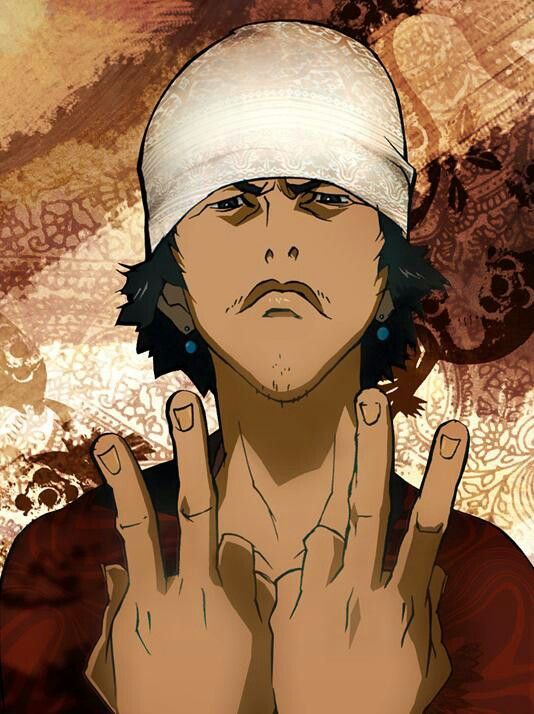
Mugen's distinctive style is an eclectic blend of Edo-period elements and modern aesthetics, making him a unique and memorable character in the anime world. His wild, unkempt hair and signature red kimono, adorned with patterned designs, immediately set him apart from other characters. His bare feet and the distinct scar on his face add to his rugged and rebellious appearance, seamlessly reflecting his free-spirited nature.
His attire is not just a fashion statement but a visual representation of his personality—unconventional and untamed. Mugen's appearance plays a crucial role in defining his character, symbolizing his resistance to authority and the societal norms of Edo-period Japan. This distinct look has made him a favorite for cosplay enthusiasts, who meticulously replicate his attire to pay homage to his iconic style.
Unique Traits and Habits
Mugen's character is further defined by his numerous unique traits and habits that reflect his complex personality. One of the most notable is his unconventional fighting style, which combines breakdancing and Capoeira elements with traditional swordsmanship. This fusion creates a visually stunning and highly unpredictable technique that leaves opponents off-guard.
Another distinctive trait is Mugen’s carefree and often reckless attitude. He exhibits a disdain for authority and an insatiable thirst for freedom, which leads him to take on considerable risks without much forethought. Despite this, his natural combat instincts and exceptional agility usually see him through dangerous situations.
Interestingly, Mugen has a peculiar habit of sleeping with his mouth open and in odd, often uncomfortable positions, adding a touch of humor and relatability to his character. His hearty appetite and lack of table manners also highlight his untamed, wild nature.
Behind-the-Scenes Insights
The creation and development of Mugen were driven by a combination of historical and contemporary cultural influences. Director Shinichirō Watanabe aimed to create a character that would break traditional samurai archetypes, blending hip-hop culture with the samurai ethos to craft someone who was irreverent yet compelling. The unique fusion of styles in Mugen's fighting techniques was choreographed to align with the series' groundbreaking soundtrack, produced by renowned artists such as Nujabes and Fat Jon.
Voice actor Kazuya Nakai, who brought Mugen to life with his gritty and dynamic vocal performance, contributed significantly to the character's depth and appeal. Nakai’s delivery perfectly captured Mugen’s rebellious spirit and raw emotion, adding an extra layer of authenticity to his portrayal. In English dubs, actor Steve Blum voiced Mugen, and his equally impressive performance helped broaden the character's appeal to a global audience.
In creating Mugen, Watanabe and his team also drew inspiration from historical ronin (masterless samurai) and the stereotypes associated with "bad-boy" personas in hip-hop culture. This blend of influences resulted in a character that was both timeless and ahead of his time, resonating with audiences around the world.
Conclusion
Mugen, with his flamboyant personality and unique fighting style, stands as an enduring icon in the world of anime. His character arc in "Samurai Champloo" is not just a journey of personal growth but also a metaphor for the clash of old and new, tradition and rebellion. Starting as a rootless wanderer with a disdain for authority, Mugen's travels with Jin and Fuu expose him to the complexities of human relationships and the value of loyalty and companionship. His evolution is subtle yet impactful, as he learns to channel his rebellious spirit into a force that not only aids his friends but also helps him understand himself better.
Within the broader narrative of "Samurai Champloo," Mugen serves as a counterbalance to Jin's stoic adherence to samurai code and Fuu’s hopeful quest. Their dynamic trio encapsulates the essence of the show—blending historical elements with modern culture, and creating a story that is both reflective and forward-thinking. Mugen’s carefree and often reckless nature drives much of the action, bringing both humor and tension to the series.
The legacy of Mugen extends far beyond the screen. His character has inspired countless fan arts, cosplays, and even academic discussions on the fusion of culture in media. Fans of "Samurai Champloo" continue to hold Mugen in high regard, celebrating his unorthodox approach to life and combat. Even years after the series concluded, there are lingering hopes among fans for a continuation or spin-off that would allow them to revisit this compelling character. Mugen's blend of historical and contemporary influences, coupled with his undeniable charisma, ensures that he remains a beloved character, resonating with old fans and capturing the imagination of new ones.