Chat with 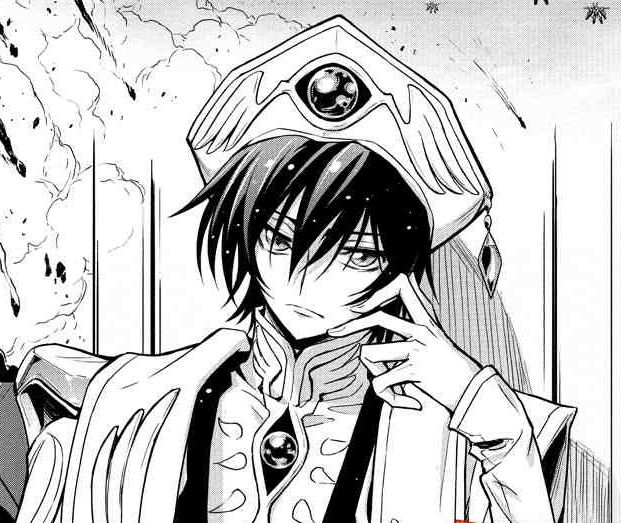 Lamperouge, Lelouch
Lamperouge, Lelouch's backstory
| Name | Lelouch Lamperouge |
|---|---|
| Pronounciation | /ˈluːluːʃ/ LOO-loosh |
| Birthday | December 5, 1999 |
| Marital Status | Single |
| Zodiac Sign | Sagittarius |
| Height | 178 cm (5'10") |
| Eye Color | Violet |
| Hair Color | Black |
| Occupation | Student, Revolutionary Leader |
| Blood Type | A |
| Nationality | Britannian (formerly), Japanese |
| Favorite Food | Unknown |
| Least Favorite Food | Unknown |
| Hobbies | Chess, Strategy Games |
| Abilities Special Powers | Geass (Power of Absolute Obedience), Genius-level intellect |
| Known Family Members | Nunnally vi Britannia (Sister), Charles zi Britannia (Father), Marianne vi Britannia (Mother) |
| Associated Characters | Suzaku Kururugi, C.C., Kallen Stadtfeld, Shirley Fenette |


Introduction to Lelouch Lamperouge
Lelouch Lamperouge, the enigmatic anti-hero of "Code Geass: Lelouch of the Rebellion," is a character of extraordinary complexity and depth. Born as Lelouch vi Britannia, the son of the 98th Emperor of the Holy Britannian Empire, Charles zi Britannia, Lelouch assumes the alias of Lelouch Lamperouge to conceal his true identity. His journey throughout the series is fraught with high-stakes battles, intricate political maneuvering, and deeply personal quests, making him a central figure in the "Code Geass" narrative.
Lelouch's significance in "Code Geass" cannot be overstated. As the mastermind behind the masked vigilante persona known as Zero, he orchestrates a rebellion against the mighty Britannian Empire. His intellect and strategic prowess make him a formidable opponent, yet it is his moral ambiguity and the lengths to which he will go to achieve his goals that truly define him as a character. Lelouch's story is one of sacrifice and determination, as he continually grapples with the consequences of his actions and the ethical dilemmas posed by his quest for justice and revenge.
Among fans of the series, Lelouch is a beloved character, revered not only for his cunning and intelligence but also for his emotional depth and the evolution of his personality throughout the series. His iconic catchphrase, "I, Lelouch vi Britannia, command you," delivered with the power of his Geass, has cemented him as a memorable and influential figure in anime culture. Moreover, his complex relationships with other characters, especially his sister Nunnally and his best friend-turned-enemy Suzaku, add layers of intrigue and human drama to his story, further endearing him to the audience.
Lelouch's popularity transcends the bounds of the series, influencing a plethora of fan art, cosplay, and even philosophical discussions about his actions and their moral implications. He is a character who inspires both admiration and reflection, embodying the struggle between idealism and pragmatism. In essence, Lelouch Lamperouge is a testament to the depth of storytelling in anime, offering viewers a protagonist who is as enigmatic as he is captivating.
Early Life and Background
Lelouch Lamperouge, originally born as Lelouch vi Britannia, has a complex and intriguing early life that significantly shapes his character throughout "Code Geass: Lelouch of the Rebellion."
Birth and Childhood as Lelouch vi Britannia
Lelouch was born on December 5, 2000 a.t.b. as the Eleventh Prince of the Holy Britannian Empire. He is the son of the 98th Emperor, Charles zi Britannia, and his mother, Marianne vi Britannia, who was of common birth but elevated due to her marriage. Lelouch's early childhood was marked by the luxury and privilege typical of Britannian royalty. He was intellectually gifted from a young age, showing a keen mind and strategic brilliance even in his formative years.
Relationship with His Family, Especially His Sister Nunnally
The bond between Lelouch and his younger sister, Nunnally vi Britannia, is profoundly central to his story. Nunnally's tragic circumstances—she became blind and wheelchair-bound after witnessing the assassination of their mother, Marianne—deeply affect Lelouch, instilling in him a fierce protectiveness and determination to create a world where she can live happily and safely. Their relationship transcends mere sibling affection; Nunnally is the moral anchor and primary motivator behind many of Lelouch's actions.
Lelouch's relationship with his father, Emperor Charles, is fraught with tension and resentment. After Marianne's assassination, Charles seemingly abandoned Lelouch and Nunnally, which seeded Lelouch's deep mistrust and antagonism toward his father and the entire Britannian establishment.
Exile and Adoption of the Name "Lelouch Lamperouge"
Following the cataclysmic death of their mother and Nunnally’s subsequent condition, Lelouch confronted Emperor Charles, accusing him of apathy. In response, Charles exiled Lelouch and Nunnally to Japan—a political pawn in an ongoing conflict with the nearby nation. Japan eventually fell to Britannia, becoming Area 11, and during the invasion, Lelouch and Nunnally were presumed dead by the empire.
Adopting the guise of Lelouch Lamperouge, he and Nunnally were taken in by the Ashford family, who were allies of his mother's lineage. At Ashford Academy, Lelouch lived a double life: by day, he was an unassuming student, but by night, he strategized ways to overthrow the Britannian oppression, driven by the desire to create a peaceful world for Nunnally.
Through these formative experiences, Lelouch's early life paints the picture of a character shaped by profound loss, deep familial bonds, and a relentless drive for justice and reparation.
Personality Traits
Lelouch's Intelligence and Tactical Prowess
Lelouch Lamperouge, formerly known as Lelouch vi Britannia, is celebrated for his extraordinary intelligence and tactical brilliance. From a young age, he demonstrated a prodigious intellect, excelling academically and in strategic games like chess. This keen mind is perhaps best exemplified in his role as the leader of the Black Knights, where he outsmarts his adversaries with intricate plans and psychological warfare. Lelouch's ability to anticipate and manipulate the actions of others positions him as a master tactician. This characteristic is humorously highlighted in the series during one of his chess matches, where he states confidently, "I win." His statement often foreshadows his impending victory, despite seemingly insurmountable odds.
Strong Sense of Justice and Revolution
Lelouch's actions throughout "Code Geass" are driven by a complex sense of justice and a revolutionary spirit. His ultimate goal is to overthrow the oppressive Britannian Empire and create a peaceful world for his sister, Nunnally. This sense of justice, however, is subjective and deeply personal. He believes that the ends justify the means, often resorting to morally ambiguous tactics to achieve his goals. For instance, Lelouch takes on the identity of Zero, a masked vigilante, to lead the Black Knights against Britannian tyranny. His rallying cry, "The only ones who should kill are those prepared to be killed," underscores his belief in the gravity and responsibility of taking lives for a greater cause.
Complex Relationship with Morality and Ethics
Lelouch's approach to morality and ethics is intriguingly complex, often walking a fine line between heroism and villainy. While he fights against an oppressive regime, his methods are sometimes ruthless, resulting in significant collateral damage. Notable is the incident with the Geass command that inadvertently leads to the massacre of Japanese civilians, an incident that haunts him deeply. Lelouch's moral ambiguity is central to his character's complexity. As creator Ichirō Ōkouchi stated, "Lelouch’s actions are a mirror reflecting the extremities people might go to for their beliefs, illustrating the fragile line between a hero and a tyrant."
Distinctive Features and Demeanor
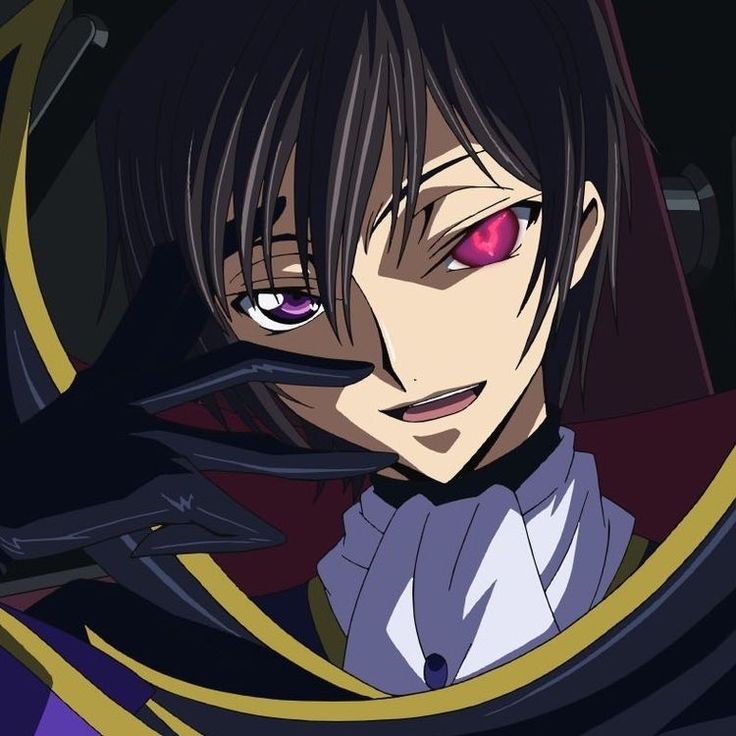
Physically, Lelouch is characterized by his sharp, aristocratic features, which reflect his royal heritage. His violet eyes and jet-black hair make him stand out among the characters. His demeanor is a blend of charisma and authority, often masking his more vulnerable and compassionate side. Lelouch's body language, including his frequent confident gestures and penetrating gaze, underscores his dominance and resolve. This commanding presence is especially evident during his speeches as Zero, where he galvanizes the masses with his conviction and oratory prowess. A memorable quote that captures this is, "I am Lelouch vi Britannia, son of Emperor Charles zi Britannia, and I will build a new world."
In summary, Lelouch Lamperouge is a character of profound depth, his personality intertwined with intellect, revolutionary fervor, and a nuanced moral compass. These traits, combined with his distinct appearance and demeanor, create a compelling and multidimensional protagonist in "Code Geass."
Abilities and Powers
Geass: Power of Absolute Obedience
Lelouch Lamperouge's most iconic ability is his Geass, known as the Power of Absolute Obedience. Granted by the enigmatic C.C., this supernatural power allows Lelouch to issue commands that cannot be disobeyed, provided he makes direct eye contact with the target. The origin of Geass is shrouded in mystery, rooted in the ancient contract between C.C. and Lelouch, which bestows him with this formidable ability.
The Geass manifests as a glowing sigil in Lelouch's left eye, and its activation often comes with the command, "I, Lelouch vi Britannia, command you!" Geass enables Lelouch to influence a wide variety of actions, from simple directives to complex orders that can result in significant shifts in loyalty and behavior. For instance, one of the earliest and most impactful uses is when he commands a Britannian soldier to kill his comrades, thus spiraling into a chain of events that alter the course of his rebellion.
Despite its overwhelming power, Geass has notable limitations. Each target can only be affected once, and Lelouch must establish direct eye contact for the command to take effect. Additionally, the overuse of Geass leads to unintended and sometimes catastrophic consequences, highlighting a recurring theme of unintended repercussions. A pivotal moment illustrating this is the tragic event mistakenly caused by his command on Princess Euphemia, leading to a massacre that forever haunts Lelouch.
Tactical Genius
Lelouch's abilities extend beyond his supernatural power, encompassing his extraordinary tactical genius. His intellect, honed through years of strategic games and academic excellence, translates into brilliant battlefield strategies and innovative tactics. Lelouch's proficiency in chess is a metaphor for his strategic mind, where he sees life-and-death battles as complex puzzles to be solved.
One of the hallmarks of Lelouch's tactical approach is his ability to anticipate and manipulate the actions of his adversaries. As the leader of the Black Knights, he orchestrates numerous victories against the numerically and technologically superior Britannian forces. A prime example is the battle at Narita, where Lelouch skillfully uses the terrain to his advantage, causing a landslide that decimates the enemy forces while minimizing casualties among his troops.
His ingenuity is also evident in the formation of the United Federation of Nations and the coordinated attacks against Britannian strongholds. His strategies often involve psychological elements, leveraging public perception and political maneuvering to weaken his foes. This is highlighted in the capture of the Tokyo settlement, where he employs deception and misdirection to outflank and overwhelm the Britannian defense.
Lelouch's tactical prowess isn't limited to large-scale battles but extends to individual encounters as well. His duel with his half-brother, Prince Schneizel, in the series' climax is a masterclass in psychological warfare and game theory, culminating in Lelouch's decisive victory.
In essence, Lelouch Lamperouge's fusion of Geass and tactical genius creates a character capable of reshaping the geopolitical landscape of "Code Geass." His strategic acumen and the almost god-like power of Geass form the crux of his rebellion against Britannia, driving much of the narrative's tension and drama.
Key Story Arcs and Achievements
The Rebellion Against Britannia
Lelouch Lamperouge’s most significant accomplishments stem from his spirited rebellion against the Holy Britannian Empire. Using the codename "Zero," he forms the vigilante group known as the Black Knights, aiming to overthrow the imperial rule and create a world where his sister, Nunnally, can live in peace. The Black Knights quickly become a formidable force under Lelouch's leadership, primarily due to his exceptional ability to strategize and inspire loyalty among his ranks. They achieve several critical victories that shake the foundations of Britannian control, including the liberation of occupied territories and the orchestration of high-profile missions that garner public support for their cause.
Shinjuku Incident
The first major battle Lelouch orchestrates as Zero is the Shinjuku Incident. Confronted with a dire situation, where the Japanese resistance forces are on the brink of extermination in Shinjuku Ghetto, Lelouch uses his burgeoning Geass power to turn the tide. He commands the Britannian forces to self-destruct and retreat, drastically changing the battle's outcome. This event marks the emergence of Zero as a revolutionary figure and garners the initial support of the Japanese populace, igniting widespread hope for liberation.
Battle of Narita
The Battle of Narita is one of the most iconic battles led by Lelouch and highlights his strategic genius in warfare. Facing the Britannian forces stationed at Narita Mountain, Lelouch capitalizes on the terrain to inflict a decisive blow. Utilizing the mountainous landscape, he orchestrates a landslide to decimate the Britannian forces, minimizing his troop casualties. This battle not only reinforces his reputation as a master tactician but also solidifies the Black Knights' standing in their war against Britannia.
Black Rebellion
The Black Rebellion represents a critical turning point in the series. During this pivotal arc, Lelouch intensifies his efforts to dismantle the Britannian regime. The rebellion reaches its zenith with the capture of the Tokyo Settlement. However, despite the Black Knights' apparent success, Lelouch's overreliance on his Geass power leads to tragic consequences, including the massacre caused inadvertently by his command on Princess Euphemia. This massacre strains his relationships and complicates his path, accentuating the moral ambiguities and costs of his quest for freedom. The rebellion ultimately fails, resulting in Lelouch's temporary capture and the disbandment of the Black Knights.
Zero Requiem
The culmination of Lelouch's journey is encapsulated in the Zero Requiem, a meticulously crafted plan that epitomizes his self-sacrificial ideals. Understanding that true peace can only be achieved through the destruction of the symbols of conflict, Lelouch resolves to become the ultimate antagonist. By declaring himself Emperor and orchestrating grand acts of tyranny, Lelouch unites the world's disparate factions against him. The climax of this arc is his orchestrated public assassination by Suzaku, posing as Zero. This act solidifies him as a martyr and erases his contentious legacy, paving the way for a more stable and peaceful world. The Zero Requiem is a testament to Lelouch's vision, intellect, and ultimate sacrifice, ensuring that his sister and the world live free from conflict.
Each of these story arcs not only advances the plot of "Code Geass" but also deepens the complexity of Lelouch's character, showcasing his growth from a vengeful prince to a tragically heroic figure willing to sacrifice himself for the greater good.
Relationships with Other Characters
Allies and Black Knights
Suzaku Kururugi
Lelouch Lamperouge's relationship with Suzaku Kururugi is one of the most emotionally complex and pivotal dynamics in "Code Geass." Childhood friends torn apart by differing ideologies, Lelouch and Suzaku find themselves on opposing sides of the conflict. Suzaku, growing up in Japan (formerly Area 11), aims to reform Britannia from within, joining the ranks of their military in hopes of achieving change through legal means. Conversely, Lelouch embraces rebellion and sedition as Zero. Their paths cross repeatedly, often putting their friendship and loyalties to the test. One of the most striking moments is their confrontation during the Battle of Narita, where Suzaku, piloting the Lancelot, confronts Zero, unaware that it is Lelouch. Despite their conflicting goals, the pair share a deep, albeit strained, affection for each other, culminating in Lelouch's Zero Requiem plan, which has Suzaku don the mantle of Zero to kill Lelouch, symbolizing a tragic reconciliation and ultimate mutual understanding.
C.C.
C.C. plays an integral role in Lelouch's journey both as a co-conspirator and as an enigmatic confidante. Their relationship begins when C.C. grants Lelouch the power of Geass, setting him on his path to rebellion. Throughout the series, C.C. stands by Lelouch, offering guidance, support, and, occasionally, harsh reality checks. Her immortality and mysterious past juxtapose Lelouch's mortal struggles, but their bond deepens as they share their burdens and secrets. In pivotal moments, C.C.'s presence is both a source of comfort and a reminder of the sacrifices Lelouch must make. For instance, their shared moment in the thought elevator reveals the depth of their understanding and connection, demonstrating C.C.'s unwavering support and Lelouch's reliance on her as a partner in his mission.
Kallen Kozuki
Kallen Kozuki, one of the formidable Black Knights, shares a significant and evolving relationship with Lelouch. Initially, Kallen is unaware of Zero’s true identity, often clashing with Lelouch at Ashford Academy where she maintains her cover. However, as the story progresses, Kallen becomes one of Lelouch's staunchest allies, showing immense loyalty and dedication to Zero's cause. Their relationship is marked by mutual respect and subtle romantic undertones. Notable moments include Kallen’s internal struggles with her mixed identity and her unwavering faith in Zero, even when his decisions seem morally ambiguous. The complexity of their bond is encapsulated in their poignant interactions, especially during the Black Rebellion and the final confrontation where Kallen learns the full weight of Lelouch’s sacrifices.
Family Members
Nunnally vi Britannia
Nunnally vi Britannia is the central pillar of Lelouch's motivations throughout "Code Geass." As Lelouch's younger sister, she represents innocence and the future he wishes to protect. Paralyzed and blinded from childhood trauma, Nunnally's fragile state makes her both a symbol of purity and a poignant catalyst for Lelouch's rebellion. Lelouch's actions, from forming the Black Knights to orchestrating the Zero Requiem, are driven by his desire to create a peaceful world for Nunnally. Their interactions are filled with affectionate care, with Lelouch often shielding her from the harsher truths of his activities. One of the most heart-wrenching scenes occurs when Nunnally confronts Lelouch during the final episodes, professing her unwavering belief in his inherent goodness. This confrontation underscores the profound impact Nunnally’s faith and perspective have on Lelouch, underscoring her role as the emotional core of his endeavors.
Other Key Figures
Rivals and Antagonists
Lelouch's relationships with his rivals and antagonists add significant depth to the narrative of "Code Geass."
- Charles zi Britannia: As Lelouch's father and the Emperor of Britannia, Charles embodies the tyranny and oppression Lelouch seeks to dismantle. Their relationship is fraught with betrayal and ideological conflict, culminating in their climactic face-off within the thought elevator. Charles’ dismissal of human individuality and his utopian vision starkly contrast Lelouch's belief in self-determination and freedom.
- Schneizel el Britannia: Lelouch's older brother and chief rival, Schneizel, presents an intellectual and strategic challenge. Unlike Charles, Schneizel's pragmatism and cunning make him a formidable opponent. Their confrontations are marked by intense tactical battles of wit, such as the dramatic showdown over the Damocles. Schneizel’s respect for Lelouch’s intellect is counterbalanced by his underestimation of Lelouch’s emotional depth and willingness to sacrifice.
Each of these relationships weaves a rich tapestry of alliances, conflicts, and emotional stakes that define Lelouch Lamperouge’s journey in "Code Geass." Through his interactions with friends, family, and foes, Lelouch's multifaceted character is revealed, highlighting his struggles, motivations, and the profound impact he has on those around him.
Popularity and Cultural Impact
Influence on Pop Culture
Lelouch Lamperouge, the enigmatic protagonist of "Code Geass: Lelouch of the Rebellion," has had a profound impact on pop culture. Since its debut in 2006, "Code Geass" and its lead character have garnered a robust global following. Lelouch's complex persona, marked by his intelligence, moral ambiguity, and revolutionary zeal, resonates with viewers and has inspired a plethora of discussions, analyses, and fan creations. His iconic mask and the moniker "Zero" have become symbols of rebellion and cunning in popular media, often referenced in other anime, manga, and even Western entertainment.
Lelouch's influence extends to inspiring other anime protagonists, often seen in characters who encapsulate a blend of strategic brilliance and deep personal convictions. This archetype has been popularized in modern series, echoing the layers and nuance that Lelouch brought to his role as a revolutionary leader.
Merchandise and Fanbase
The popularity of Lelouch Lamperouge can be vividly seen in the extensive range of merchandise available, catering to a widespread and dedicated fanbase. From action figures and statues to apparel and accessories, Lelouch's image is emblazoned on a multitude of products. His character's appeal transcends mere collectibles; it delves into themed goods such as notebooks, mobile phone cases, and even cosplay outfits. Cosplayers frequently don Lelouch’s distinctive Zero costume at conventions, showcasing their admiration for the character and the series.
The fanbase's dedication is also evident in the myriad of fan art, fan fiction, and online discussions that continue to thrive years after the show's conclusion. Online forums and social media platforms buzz with debates and appreciations of Lelouch's character arc and the intricate plot of "Code Geass." The annual surge in activity around the character during anniversary events and new releases also reflects his enduring appeal.
Notable Appearances in Media
Beyond the confines of "Code Geass," Lelouch has made notable appearances in various media, expanding his influence and keeping the character relevant. His role in crossover video games like "Super Robot Wars" and "Jump Force" introduces him to new audiences, allowing them to explore his abilities and storyline in different contexts. In these games, Lelouch’s leadership skills and tactical prowess are often highlighted, providing a unique blend of gameplay that mirrors his strategic genius from the series.
Additionally, "Code Geass" has seen numerous adaptations and spin-offs, including manga series, novels, and OVA episodes that further explore Lelouch's narrative and alternate storylines. One such example is "Code Geass: Lelouch of the Resurrection," a film that reignited interest in the franchise and provided fans with new content regarding Lelouch's journey.
Lelouch's impact is also reinforced through promotional collaborations and special events, like anime-themed cafes and exhibits in Japan, where fans can immerse themselves in the world of "Code Geass." These ventures not only celebrate Lelouch's character but also bolster the series' legacy in the realm of anime.
Lelouch Lamperouge stands as a quintessential example of a character whose influence reverberates through time, continuously captivating and inspiring fans across the globe.
Trivia and Fun Facts
Lelouch’s Favorite Chess Pieces and Strategies
Lelouch Lamperouge's strategic brilliance is often symbolized through his love for chess, a game that mirrors his tactical maneuvers against the Britannian Empire. His favorite piece is the king, reflecting his role as a revolutionary leader and his complex journey to achieve his goals. The king represents both immense power and vulnerability, much like Lelouch himself, who navigates his dual life as a student and the masked leader Zero.
One of Lelouch's most notable chess strategies is his audacious use of the king, often moving it into aggressive positions. This unconventional approach signifies Lelouch's tendency to place himself in danger to achieve his objectives, demonstrating his willingness to risk everything for the greater good. An emblematic quote from Lelouch, "If the king doesn’t lead, how can he expect his subordinates to follow?" encapsulates his philosophy and leadership style.
Least Favorite Things
Lelouch Lamperouge, though a master strategist, has his own set of dislikes. As a character who thrives on control and calculated risks, Lelouch is notably averse to situations where he is powerless or manipulated. This aversion is poignantly illustrated in his profound disdain for his father, Emperor Charles zi Britannia, whose autocratic rule and callous disregard for human life sparked Lelouch's rebellion.
In terms of food, there is no specific documentation of Lelouch’s least favorite dishes within the anime. However, his dislike for unnecessary cruelty and suffering is evident in his actions and decisions throughout the series. He often places innocent lives above his strategic goals, showcasing his underlying sense of justice despite his often morally ambiguous methods.
Character Development Insights
Lelouch Lamperouge’s character arc is one of the most intricate and compelling aspects of "Code Geass." Initially introduced as a brilliant yet disillusioned prince, Lelouch's journey is a testament to his evolving understanding of power, sacrifice, and justice. One of the transformative moments in his development is the death of his beloved sister, Euphemia. This tragedy propels Lelouch into deeper internal conflict, intensifying his resolve to overthrow the Britannian Empire.
The creator of "Code Geass," Ichirō Ōkouchi, has highlighted Lelouch's arc as an exploration of ethical ambiguity and the burdens of leadership. According to Ōkouchi, “Lelouch's character is designed to challenge the conventional notions of heroism and villainy. His decisions and their consequences are meant to reflect the complexities of real-world leadership and the often painful choices that come with it.”
Lelouch's evolution from a vengeful prince to a selfless martyr culminates in the Zero Requiem, a plan that involves his own death to usher in a world of peace. This ultimate sacrifice underscores the depth of his character and the profound themes of atonement and redemption that permeate the narrative. His famous last words, "I destroy worlds... and create them anew," encapsulate the duality of his actions and the lasting impact of his legacy.
In essence, Lelouch Lamperouge's multifaceted personality and the strategic nuances of his character make him an enduring figure in anime. His favorite and least favorite things, coupled with insights into his development, offer a richer understanding of the intricate web of motivations and consequences that define his journey.
Conclusion
Lelouch Lamperouge’s journey in "Code Geass" is a tapestry of intricate plotlines, profound character development, and morally ambiguous decisions. Starting as a disillusioned prince with a thirst for vengeance, Lelouch evolves into the enigmatic leader Zero, who masterminds a revolution against the Britannian Empire. His strategic prowess and boundless ambition, mirrored in his love for chess, underscore his complex personality and relentless pursuit of justice for his sister, Nunnally.
Throughout the narrative, Lelouch grapples with the ethical dilemmas of leadership, the heavy burden of power, and the often conflicting demands of love and duty. The death of his sister Euphemia serves as a crucial turning point, intensifying his resolve and catalyzing his transformation into a figure willing to sacrifice everything for the greater good. Ichirō Ōkouchi, the creator, poignantly captures this evolution, challenging viewers to question conventional notions of heroism and villainy.
His ultimate act of sacrifice— the Zero Requiem— encapsulates the essence of his character. By orchestrating his own death, Lelouch intends to eliminate the hatred and conflict ingrained in the world, making the ultimate sacrifice to create a peaceful future. This act cements him as both a tragic hero and a savior, amplifying the narrative's themes of redemption and atonement.
In the broader context of "Code Geass," Lelouch's story is pivotal. His actions not only reshape the geopolitical landscape of the series but also provoke critical reflections on power, justice, and the true cost of peace. His legacy reverberates beyond the confines of the story, influencing spin-offs, adaptations, and fan theories that continuously expand the "Code Geass" universe.
As fans eagerly speculate about the future, the enduring appeal of Lelouch's character keeps the series vibrant. Whether through new adaptations or speculative fan creations, the complexity and depth of Lelouch Lamperouge ensure that his influence remains in the hearts of viewers. His story, from vengeful prince to selfless martyr, will continue to inspire discussions and interpretations, underscoring his timeless relevance in the anime world.